.svg)

Otra à Liverpool, le dancefloor comme point de départ

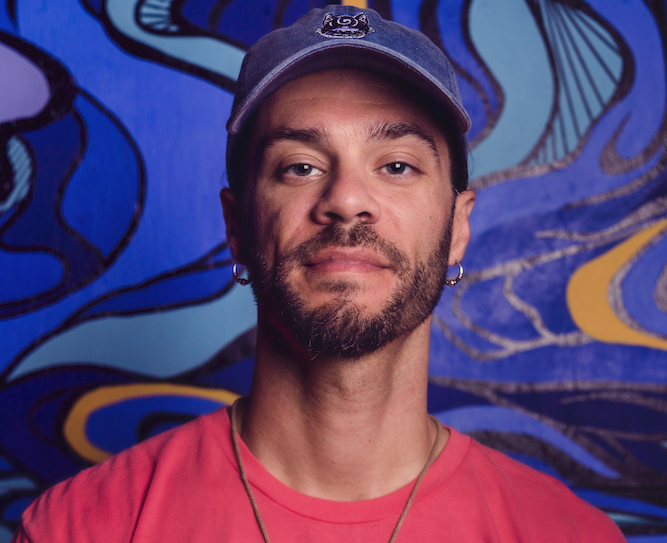
Imaginée à Liverpool par Robasca, et les DJs de Dharma Collective, James Sims et Kole Akeju, Otra est une soirée construite autour d’une idée claire : replacer le dancefloor au cœur de l’expérience. Entre héritage de la tradition des DJs éclectiques anglais, influences globales et culture de la danse, ils développent une approche ouverte et inclusive du club. À l’occasion de leur venue à La Mona, leur premier gig en France, ils reviennent sur la genèse du projet et leur manière de faire vivre un dancefloor aujourd’hui.
ENGLISH VERSION BELOW
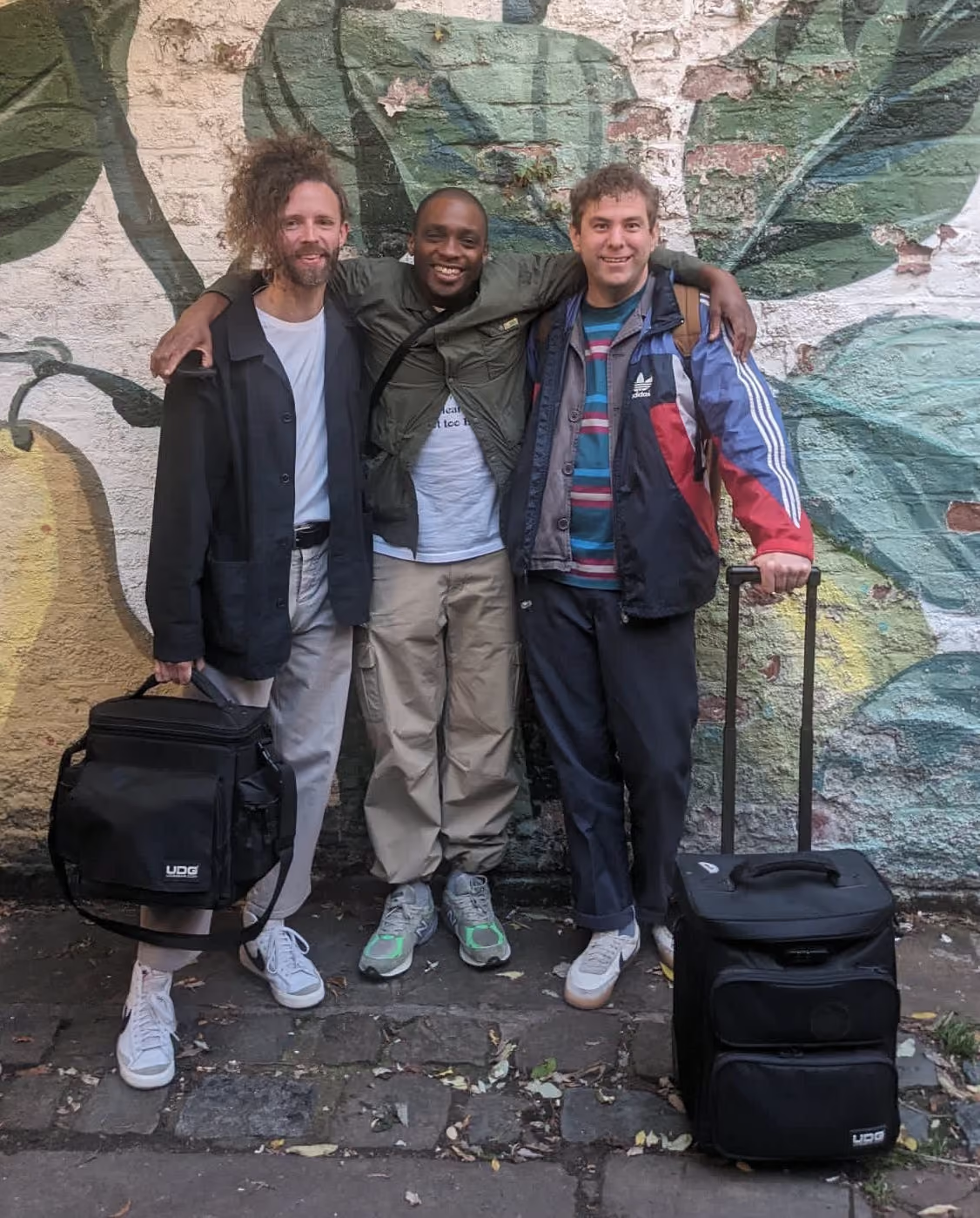
Pouvez-vous vous présenter et nous parler de vos parcours musicaux ?
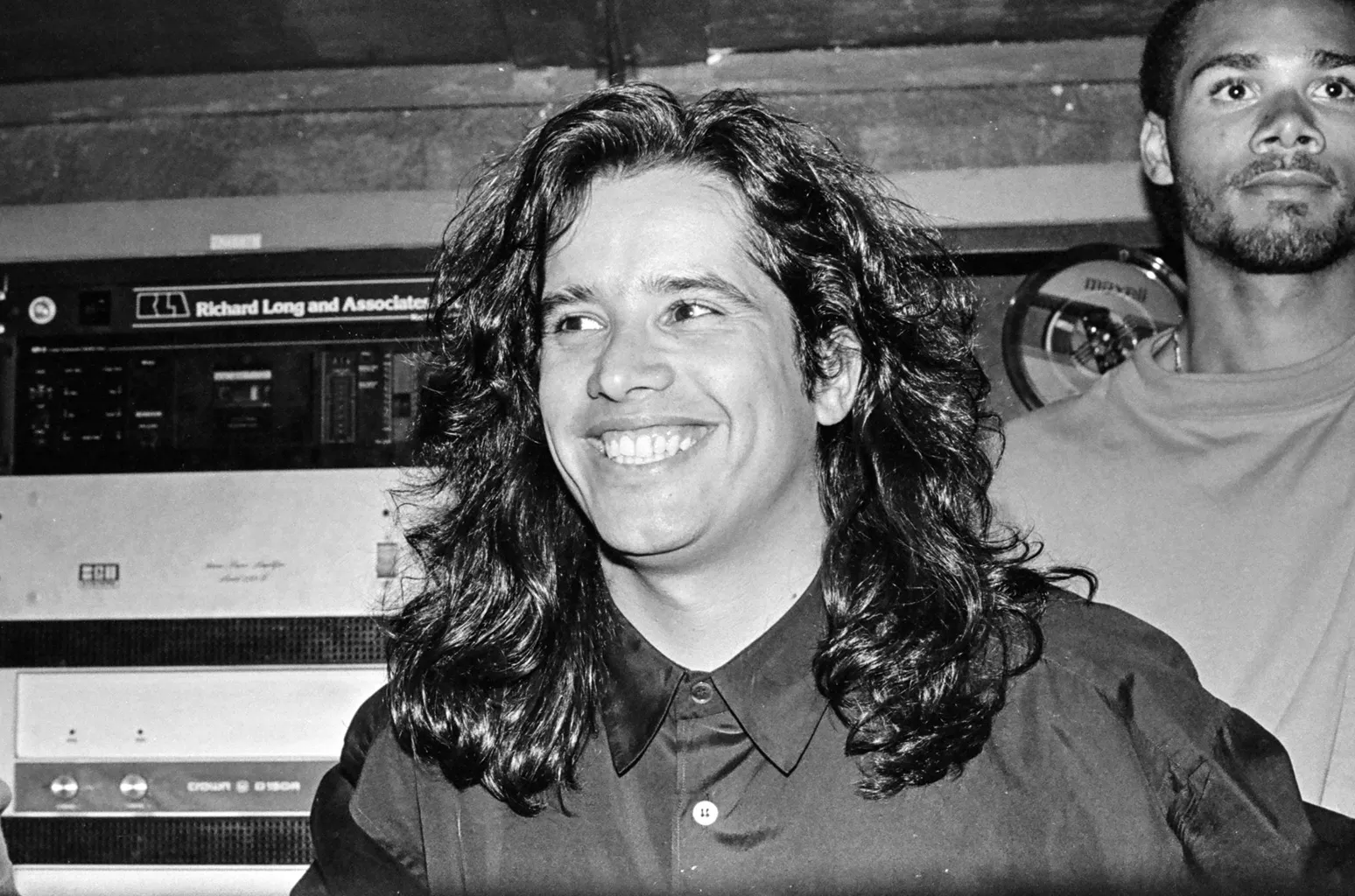
Robasca (Ross) : J’ai commencé à mixer très jeune, à la fin des années 90, en traînant avec des DJs locaux qui m’ont appris les bases en échange d’un coup de main pour installer le matériel et transporter les enceintes. Même si je n’avais que 15 ans, ils me laissaient parfois ouvrir leurs soirées et faire mes premières armes sur un dancefloor.
À l’université, j’ai découvert le breakdance, puis d’autres styles comme le locking et le popping. C’est à travers ces pratiques que j’ai connu Juste Debout, puis le hip-hop new style, et surtout le house dance, pour lequel j’ai eu un véritable coup de coeur. À l’époque, il n’y avait pas vraiment de scène house dance à Liverpool, mais il existait une communauté très active autour du breaking et des danses funk. A l'époque, on pouvait sortir danser jusqu’à cinq fois par semaine, ce qui m’a permis de créer des liens avec des DJs locaux. Ils m’ont donné l’opportunité de jouer à leurs soirées et ont toujours accueilli les danseurs comme une partie essentielle du dancefloor.
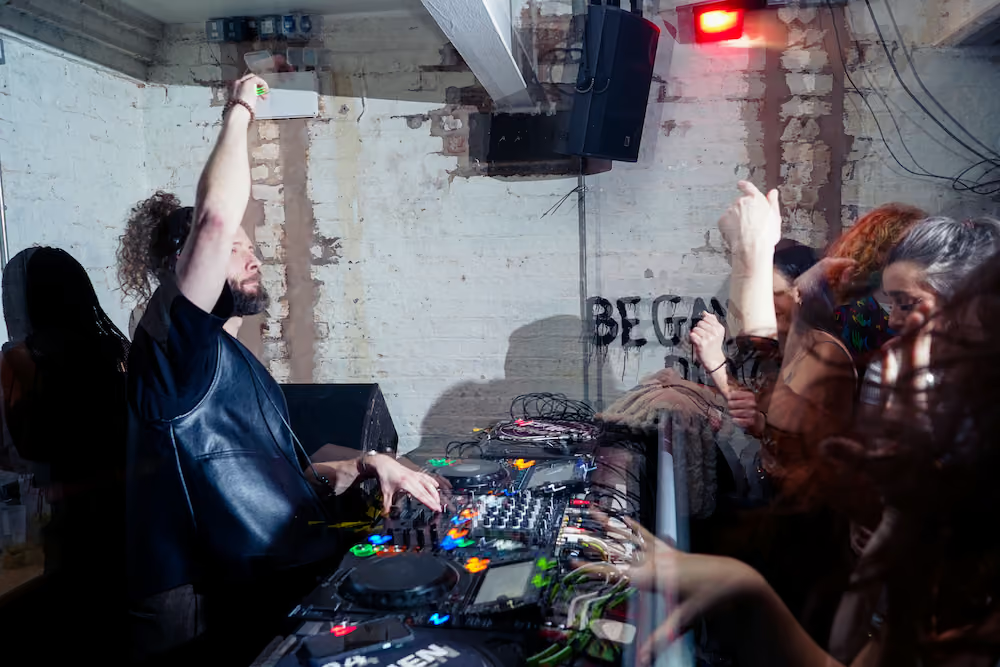
J’ai ensuite été impliqué dans deux soirées importantes dans mon parcours : Hustle à Liverpool, lancée par James Morgan, où j’ai été résident à ses débuts, et COMMUNITY à Manchester, fondée par Irfan Rainy. J’y ai d’abord été danseur résident, puis DJ, avant de devenir co-organisateur sur une quinzaine d’années.
Ces dernières années, les invitations se sont multipliées, dans différentes villes, soirées et festivals au Royaume-Uni, avec de nouvelles résidences à Liverpool, et maintenant notre première date internationale à Paris avec La Mona. Cet intérêt croissant tient aussi au fait que nous avons lancé notre propre soirée à Liverpool : Otra.
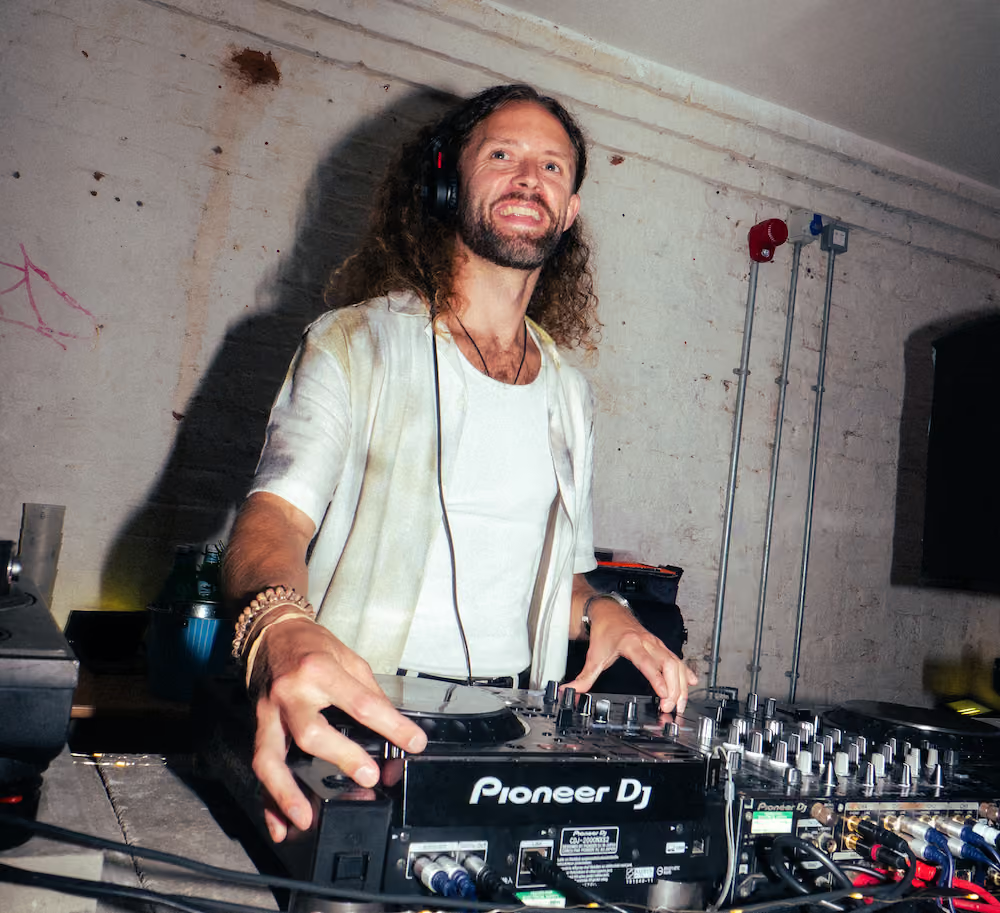
James : Je mixe depuis environ 16 ans, et à temps plein depuis une dizaine d’années. Je joue plusieurs fois par semaine à Liverpool et dans les villes alentours, tout en organisant quelques soirées. En 2015, avec Kole, on était tous les deux résidents au club The Magnet. On s’est rendu compte qu’on avait des goûts très proches, et on a commencé à jouer ensemble régulièrement. Le club fermait vers 6 ou 7h du matin, donc quand l’un de nous y jouait, l’autre venait souvent après un premier set ailleurs, et on finissait en back-to-back pendant plusieurs heures.
On a fini par se donner un nom, Dharma Collective, et à jouer ensemble dans différents événements, tout en lançant nos propres soirées. En 2017, on a commencé une émission sur la radio Melodic Distraction, à Liverpool, dont l'absence se fait beaucoup sentir aujourd'hui. Cela nous a permis d’explorer toute l’étendue de nos influences : jazz, hip-hop, musiques africaines, brésiliennes et latines, mais aussi disco, boogie, house ou broken beat. C’est aussi ce qui nous a donné une réputation de diggers. Par la suite, on a assuré des warm-ups pour des DJs qu’on admire comme Gilles Peterson, Hunee, Antal ou Luke Una, et joué en Croatie ainsi que dans plusieurs festivals au Royaume-Uni.
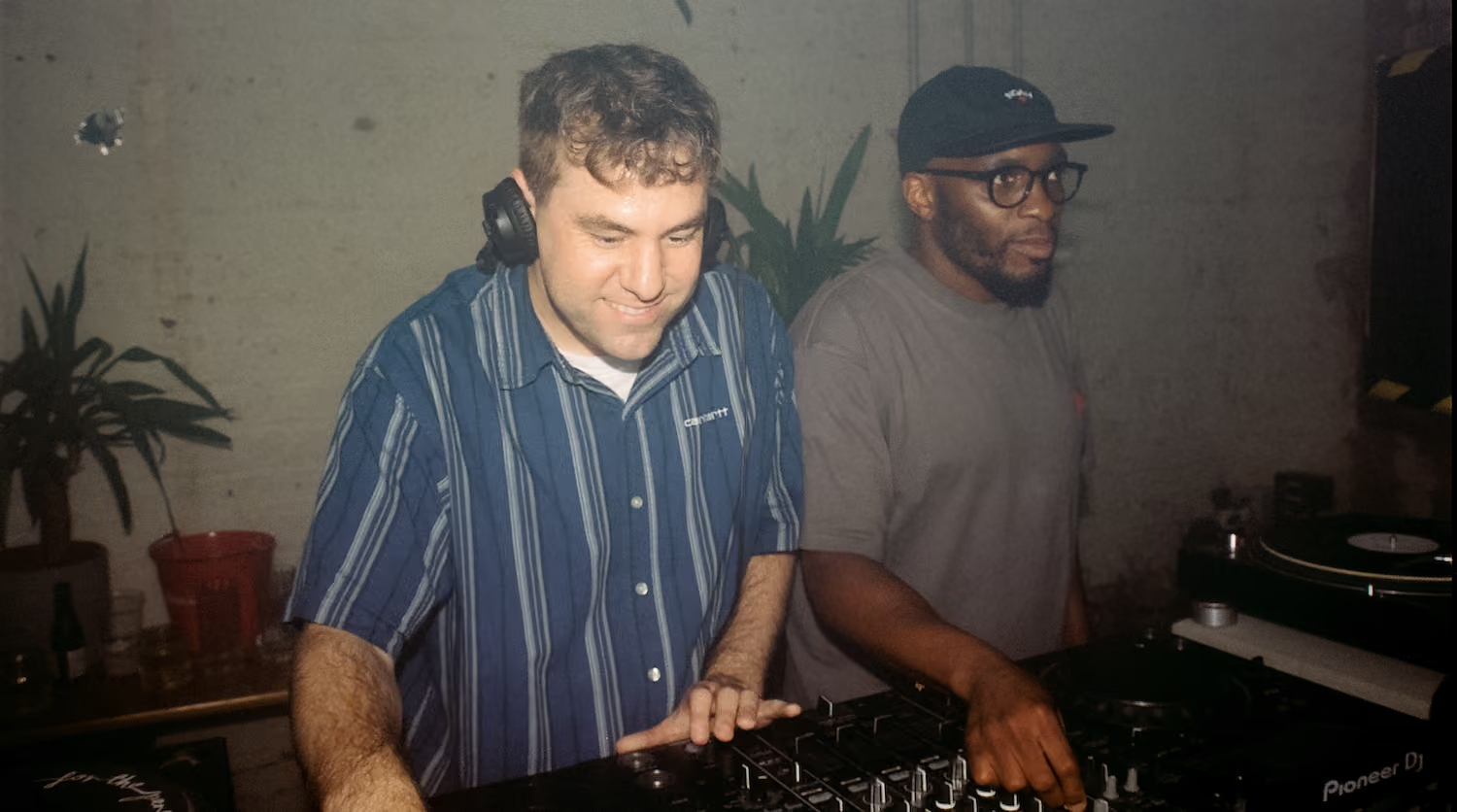
Comment vous êtes-vous rencontrés et qu’est-ce qui a motivé la création d’Otra ?
Ross : On se connaît tous depuis longtemps. À l’époque où je parcourais Liverpool comme danseur à la recherche des meilleurs sons, Kole était déjà bien installé dans la scène et faisait partie de mes DJs locaux préférés. Il a ensuite formé Dharma Collective avec James, que j’ai découvert via leur émission sur Melodic Distraction (RIP).
La première fois que j’ai entendu James, j’ai tout de suite su que je voulais le rencontrer : il jouait ces rythmes multiculturels que j’avais découverts à Manchester avec COMMUNITY, mais que j’entendais rarement à Liverpool. On s’est rapprochés naturellement, en partageant nos goûts musicaux et en allant ensemble au festival We Out Here dès la première édition. On avait le sentiment que cette diversité musicale était sous-représentée à Liverpool, et très tôt, on a eu envie de créer une soirée qui lui donnerait une place.
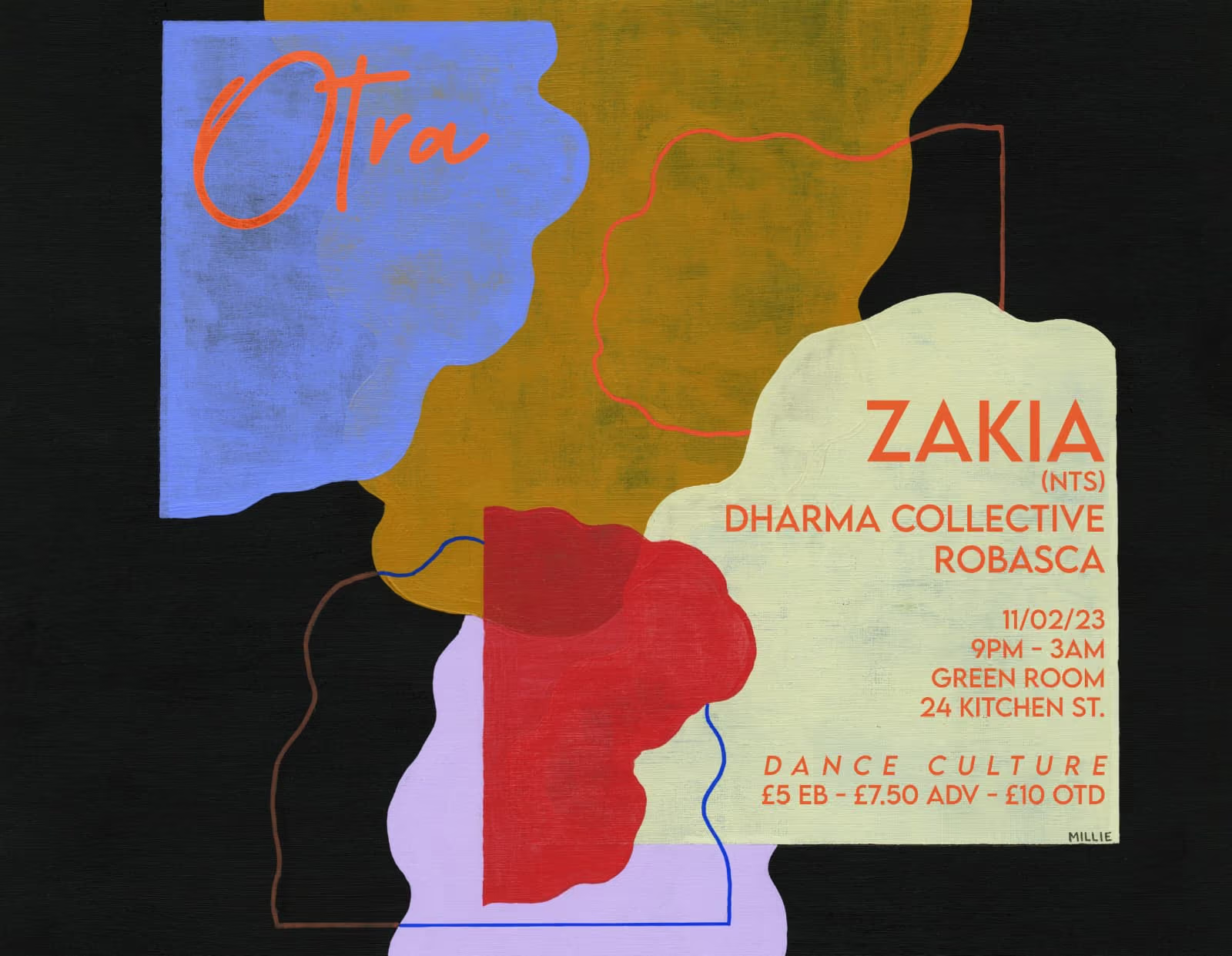
La ville a une forte culture house, et reste très attachée à la soul, au funk et au disco, mais on n’entendait pas assez les sonorités plus éclectiques qui nous animent. Après plusieurs années à en parler, c’est notamment après la première venue de James à COMMUNITY - lors de la soirée hommage à Phil Asher (RIP) - que l’idée a vraiment pris forme. On en parlait tellement autour de nous que les gens ont commencé à nous demander quand ça allait se faire. Et quand le lieu 24 Kitchen Street a ouvert un nouvel espace à l’étage, avec parquet et lumière naturelle, on a trouvé notre point de départ. On a donné un nom, une date, invité Zakia… et la première soirée a posé les bases d’une communauté qui continue de grandir.
James : Kole connaissait déjà Ross, et moi je l’ai rencontré en fréquentant les mêmes soirées. On a commencé à parler sérieusement d’un projet vers 2019, mais le Covid a tout mis en pause. En 2021, en sortant de cette période, certaines soirées ne sont jamais revenues, et on a ressenti un vrai manque à Liverpool pour ce type de proposition.
Un moment clé a été notre passage à COMMUNITY en 2022. C’était la première fois que je vivais une soirée où toute l’énergie était centrée sur le dancefloor, et pas sur le DJ. C’est ce qui nous a donné envie de créer quelque chose de similaire à Liverpool. Quelques mois plus tard, on avait un nom, et en février 2023, la première soirée Otra voyait le jour avec Zakia en invitée.
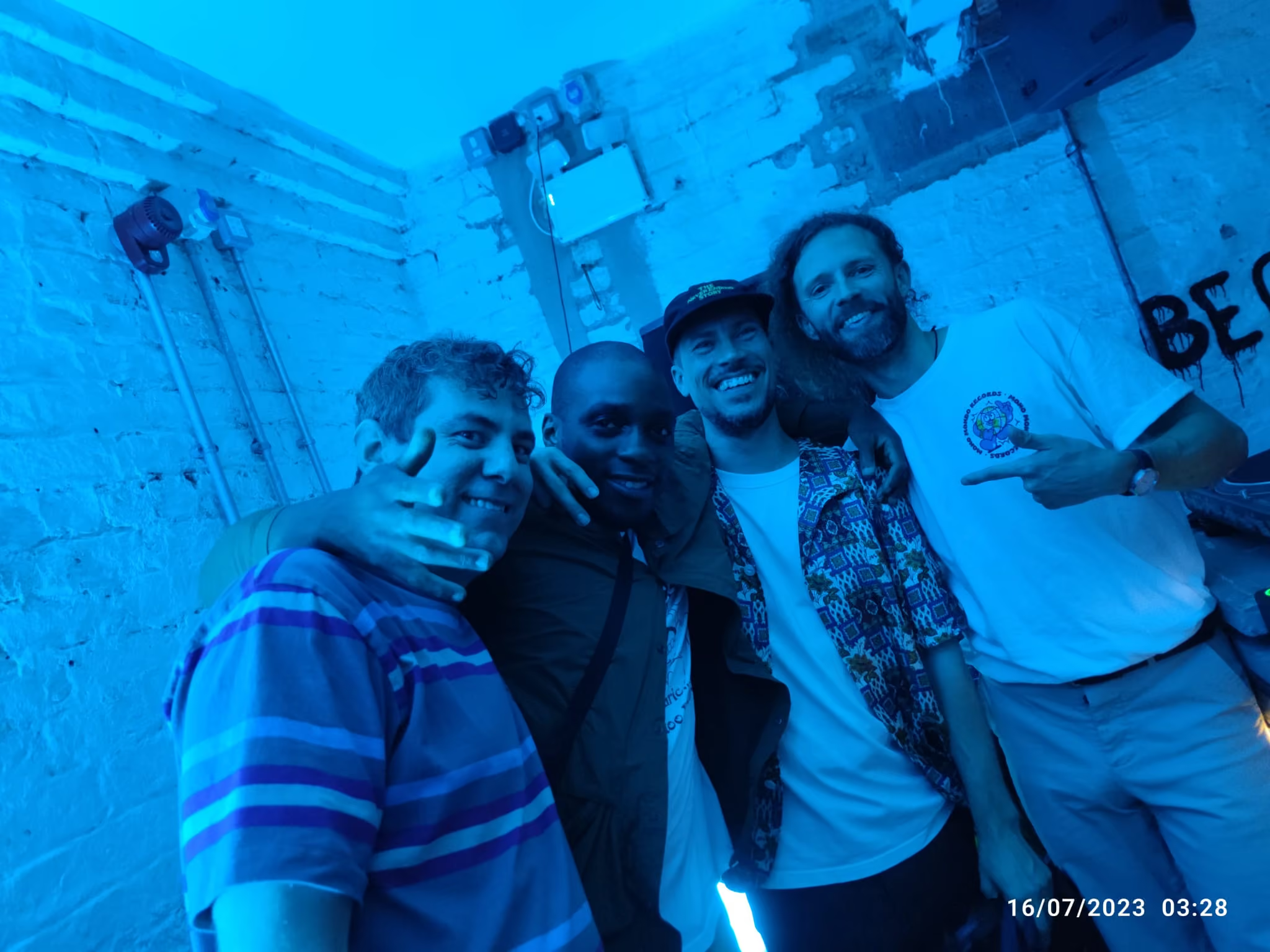
Vos sets sont très variés, entre house deep teintée de jazz, broken beat, musiques brésiliennes, afro, latines, disco… Est-ce que vous vous inscrivez dans la tradition des DJs éclectiques britanniques, comme Mr Bongo, Eglo ou Gilles Peterson ?
Ross : Dans une certaine mesure, oui. Les labels et figures que tu cites font clairement partie de nos influences, et dès le départ, l’un de nos objectifs était d’introduire plus d’éclectisme, de multiculturalisme et de diversité musicale sur au moins un dancefloor à Liverpool. On aimerait que nos soirées soient des espaces où l’on ne sait pas exactement ce qu’on va entendre, mais où l’on peut avoir une intuition en fonction de l’invité - et surtout, où l’on peut faire confiance à l’expérience dans son ensemble.
Si on est réellement dans une logique d’ouverture, jouer des styles variés permet aussi de toucher différents types de danseurs. Si un groupe de personnes réagit fortement à un morceau latino dans un coin de la salle, cette énergie devient contagieuse et peut embarquer d’autres personnes moins familières avec ces sonorités. De la même manière, quand des danseurs house s’expriment sur des morceaux plus profonds, spirituels ou soulful, ça peut transformer toute l’atmosphère du dancefloor. Les gens se nourrissent de cette énergie et ça peut tenir toute une nuit.
James : Oui, clairement, c’est quelque chose qu’on essaie de faire. Mes principales influences en tant que DJ sont sans doute Theo Parrish, Gilles Peterson et Mr Scruff. Ce sont des DJs qui jouent sans se limiter à un style, en suivant simplement ce qu’ils aiment - et pourtant, tout reste cohérent. C’est une approche qui rend les choses un peu plus difficiles à expliquer ou à “vendre”, mais j’ai toujours été attiré par des univers très variés, donc je ne pourrais pas faire autrement.

Il y a une grande diversité dans le public de vos soirées. Est-ce que c’est venu naturellement ou c’était une intention dès le départ ?
Ross : Liverpool est déjà une ville à la population assez diversifiée. Si on y ajoute une programmation éclectique, avec des invités internationaux issus de différentes cultures, dans un cadre qu’on essaie de rendre accueillant et accessible, ça crée naturellement les conditions pour voir émerger une communauté variée.
James : La musique est diverse, les invités aussi - et ça attire naturellement un public qui l’est tout autant. On a la chance d’avoir une foule ouverte, curieuse et prête à danser. C’est un cliché, mais au final, ce sont vraiment les gens qui font la soirée.
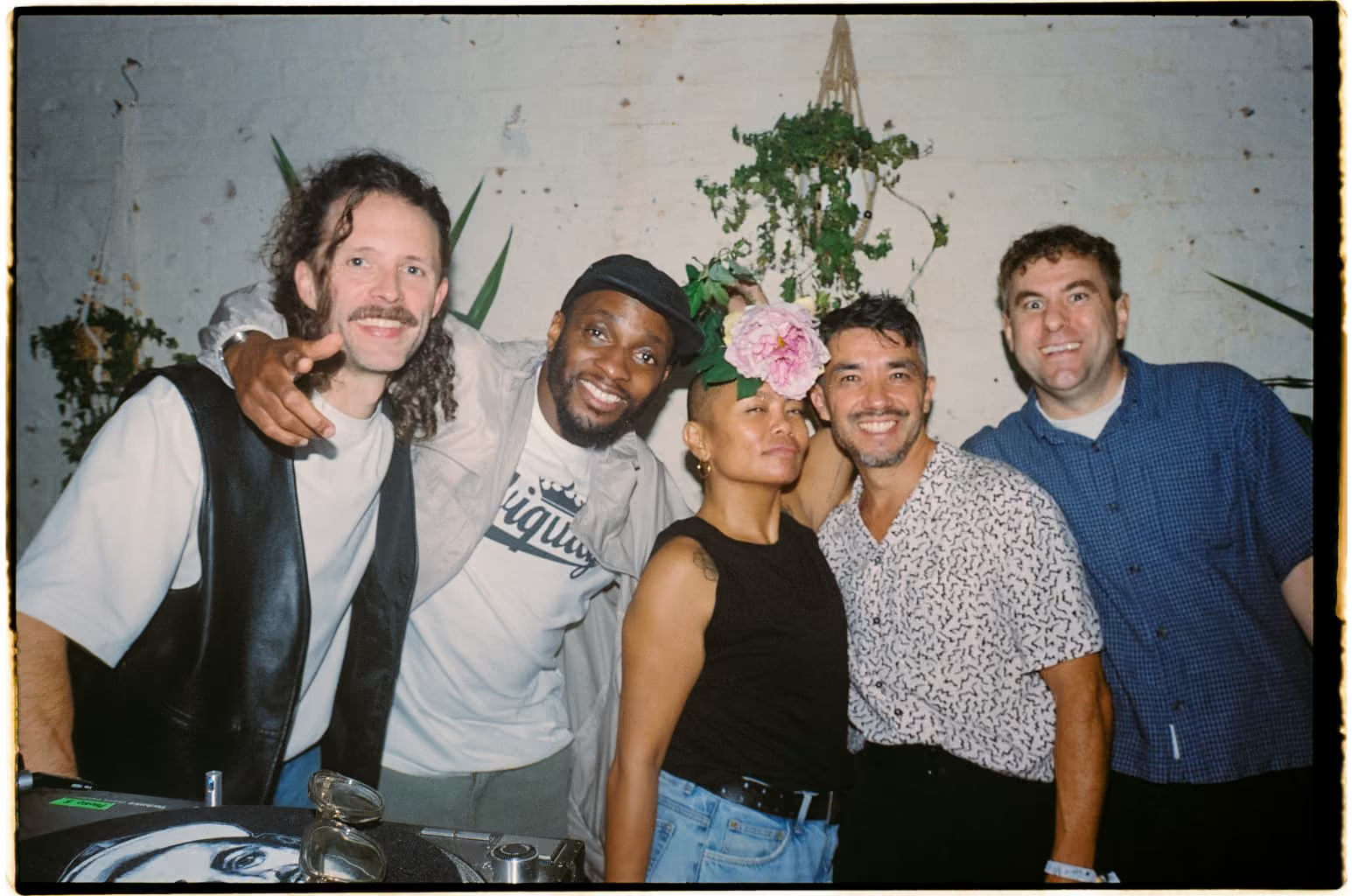
La danse semble centrale dans vos événements. Comment cette place s’est-elle imposée ?
Ross : En tant que danseur, l’un des plus grands défis, c’est de trouver des soirées où la musique donne réellement envie de bouger, dans des espaces qui permettent de danser pour de vrai. Pas juste rester sur place, serré les uns contre les autres face au DJ - mais danser en se faisant face, en interagissant, en échangeant, en se répondant, en se déplaçant dans la salle. C’est quelque chose que j’ai toujours aimé dans certaines scènes comme Paris ou New York, où les danseurs sont réellement pris en compte. Là-bas, les danseurs font la soirée - pas les DJs.
C’était déjà très présent à COMMUNITY à Manchester. Dès les premières éditions, le public était très divers, dans un lieu artistique qui a rapidement attiré une communauté de danseurs et de créatifs, et ça a donné le ton. Quand on a lancé Otra, on n’était pas dans un lieu artistique, mais dans un club récemment transformé, avec un parquet et une atmosphère assez organique - typiquement le genre d’espace dans lequel j’ai envie de danser.
Il restait à voir si le public de Liverpool suivrait. Il y a vingt ans, la scène street dance y était assez forte - plus petite que Paris ou New York, mais bien présente dans le nord de l’Angleterre. Aujourd’hui, elle est plus discrète, mais j’ai toujours eu envie de raviver cette culture et de la transmettre à une nouvelle génération. C’est dans cette idée qu’on a commencé à organiser des soirées “Dance Special”, avec un workshop en amont. La première a accueilli Nick V et Clara Bajado. On pensait avoir entre 5 et 10 personnes… finalement, 30 à 35 danseurs étaient là.
C’était une très belle manière de lancer la soirée, et on compte bien développer ça à l’avenir. On peut dire que certains sont danseurs, mais au fond, tout le monde l’est - il faut parfois juste un peu d’espace ou d’encouragement pour que ça sorte.
James : Pour moi, c’est aussi en allant à COMMUNITY que ça a fait sens. Voir une soirée remplie de danseurs change complètement la dynamique. Ross a toujours été danseur, donc c’était déjà une idée présente quand on parlait de lancer Otra. C’est aussi pour ça qu’on voulait un lieu avec un parquet. Au début, on a laissé cette dimension se développer naturellement, et maintenant on commence à structurer ça avec des workshops en amont sur certaines dates, pour renforcer encore cet aspect.
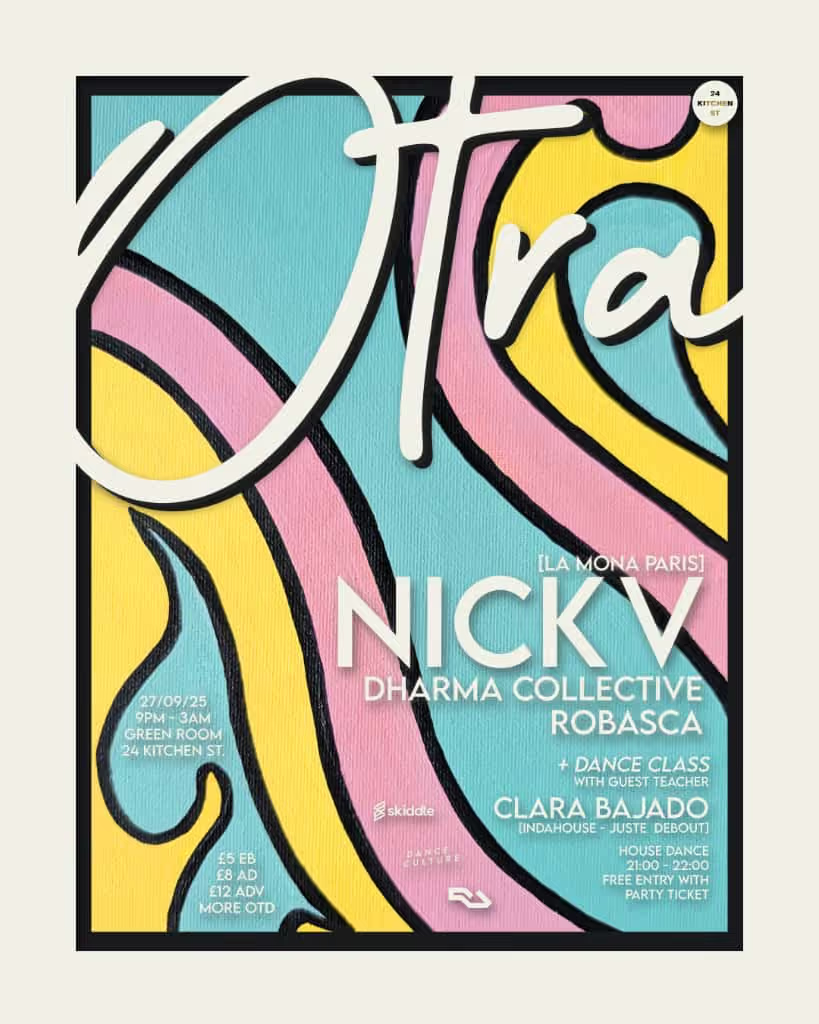
Quels sont aujourd’hui les principaux défis pour organiser ce type de soirées au Royaume-Uni ?
Ross : Il y a une forme de contradiction entre l’envie de faire connaître sa soirée au plus grand nombre et celle de rester “underground”. On dépend beaucoup des réseaux sociaux pour toucher les bonnes personnes, alors même que beaucoup s’en détachent progressivement. On réfléchit donc à d’autres formats, comme des newsletters ou des groupes plus directs, à la manière de certaines autres scènes. Il y a aussi la question des coûts : inviter des artistes internationaux implique de couvrir transports, hébergement, cachets, technique, location du lieu, staff, etc.
C’est un vrai risque financier à chaque soirée. On se demande toujours si on va rentrer dans nos frais, si les gens vont venir. Jusqu’ici, on a eu de la chance, mais les marges restent faibles. Et on sait que la fréquentation des clubs indépendants a globalement baissé au Royaume-Uni. Un signe à la fois rassurant et frustrant, c’est la difficulté à aligner les disponibilités des artistes et des lieux - ce qui veut aussi dire que tout le monde travaille.
James : Les coûts sont une préoccupation constante. Même avec un public fidèle, il y a toujours une incertitude jusqu’au dernier moment. Les gens sortent moins qu’avant, et parfois tout se joue à une question de timing. Certaines soirées fonctionnent très bien, d’autres moins, sans que ce soit vraiment maîtrisable.
On est très heureux de vous accueillir à Paris ! Pouvez-vous choisir un morceau qui donne un aperçu de ce qui vous attend ?
James : Un morceau de Jovonn que j’ai découvert récemment et joué lors de la dernière Otra. Il fait référence à la fois au Royaume-Uni et à Paris, donc ça semblait approprié de le partager ici !
ENGLISH VERSION
Founded in Liverpool by DJs Robasca, Dharma Collective aka James Sims and Kole Akeju, Otra is a party built around a clear idea: putting the dancefloor back at the center of the club experience. Blending the heritage of eclectic UK DJs, global influences and dance culture, they shape an open and thoughtful approach to clubbing. Ahead of their debut in Paris at La Mona, they reflect on the origins of the project and how they approach building a dancefloor today.
Could you introduce yourselves and tell us a bit about your musical backgrounds?
Ross : I got my start as a DJ as a kid in the late '90s hanging out with local DJs who taught me the basics in return for helping them set up their equipment and lug gear around. Despite only being 15 years old they would let me open for them and get some experience warming up a dance floor.
At university I was introduced to break dancing which led me to discover other dance styles like locking and popping through which I was introduced to Juste Debout where I learnt about new style hip hop, and most importantly House Dance which I became deeply passionate about from that day onwards.
There wasn't any semblance of a house dance scene in Liverpool at that time, but there was a great Community for b-boys and Funk stylers alike and we would be able to go out dancing sometimes as much as five nights a week. Being out so much helped build relationships with local DJs who also offered me the opportunity to play at their nights and welcomed us as dancers to support their dance floors.
I became involved in two key parties which have been instrumental in my development as a DJ. The first of which was Hustle in Liverpool run by James Morgan where I became a resident DJ in the party's formative years and secondly is COMMUNITY in Manchester run by Irfan Rainy where I started as a resident dancer, then resident DJ and eventually co-promoter, across the space of 15 years.
Recent years have seen a big upturn in invitations to play in multiple cities, parties and festivals across the UK, new residencies at multiple venues in Liverpool and most excitedly now, our first International invitation courtesy of La Mona, Paris. We can credit the upturn in interest in us as DJs to having started our own party in Liverpool, namely ‘Otra’.
James : I’ve been DJing for about 16 years and doing it full time for the last 10, DJing a few times a week in Liverpool and nearby cities and running a few small parties along the way. In 2015 me and Kole were both residents in the legendary club ‘The Magnet’ and we realised we had very similar tastes so started DJing together quite a bit. The Magnet was a 6/7am finish so when one of us was playing there, the other would normally join after playing an earlier gig elsewhere and we would go back to back for the last 3/4 hours or so.
We gave ourselves a name, Dharma Collective, and started playing together at events round the city, as well as putting on a few of our own parties. In 2017 we started a radio show on the much missed Liverpool station Melodic Distraction, which was just starting up at the time. That show gave us the opportunity to play the full breadth of our music tastes, from Jazz, Hip Hop, African, Brazilian, and Latin to Disco, Boogie, House and Broken Beat; and helped us gain a reputation in the city for being deep diggers.
Over the next few years we played supporting slots in Liverpool for a lot of our favourite DJs such as Gilles Peterson, Hunee, Antal & Luke Una, as well as gigs in Croatia and a few UK Festivals.
How did you all meet, and what inspired the creation of Otra? How did the project come about?
Ross : We've all known one another for many years. During my time bouncing around Liverpool as a dancer, searching out the best music, Kole was well established in the scene and was one of my favourite local DJs. He formed a partnership with James Sims as Dharma Collective and I was introduced to James through their radio show together on Melodic Distraction (RIP). The first time I heard James play on the radio I could tell he was somebody that I absolutely needed to be acquainted with as he was playing the diverse multicultural rhythms I'd been introduced to through COMMUNITY in Manchester but rarely heard being played out in Liverpool. We struck up a friendship, enjoyed each other's musical tastes and started attending We Out Here festival together each year from the very first event. We felt that the musical diversity we would hear across the board at We Out Here was kind of underrepresented in Liverpool and we knew from very early on that we wanted to start a party that would give a platform to this diverse musical spectrum. Liverpool has had a strong relationship with house music and to this day absolutely loves itself a bit of soul funk & disco but we weren't hearing enough of the kind of house music or eclectic sounds that drove us.
After years of deliberating about starting a party, I think it was after James came to his first COMMUNITY in Manchester, the first memorial party celebrating Phil Asher (RIP) that the determination to grow our own party in Liverpool really started to gain momentum.
We’d spoken to so many people about our idea that people were saying when's it happening? Where is it going to be? What's it going to be called? And when one of our favourite venues in Liverpool 24 Kitchen Street converted their upstairs space into what's now a lofty sky lit wooden floored Green Room, we finally found our space. We eventually gave it a name. We gave it a date. We invited our first guest Zakia and before you knew it we had a beautiful party on our hands and the start of what's becoming a beautiful community of our own.
James : Kole already knew Ross and I met him somewhere along the way from attending the same events all the time. We probably first started talking about starting something up together from around 2019, but then Covid happened. Coming out of covid in 2021, there were a couple of events I used to attend that never started up again, and so we felt there was a big gap in the Liverpool scene for the kind of party we wanted to put on, and our conversations got more serious. Attending ‘Community’ in Manchester in 2022, the party Ross was resident at was a big catalyst in us finally getting something started. It was maybe the first party I'd been to where the focus and energy was fully on the dancefloor rather than being on the DJ, exactly what a party should be like, and I knew we needed to try and create a similar vibe in Liverpool. It took us another 6 months or so to settle on a name and we had our first party finally in February 2023 with Zakia as our guest DJ.
Your sets are very diverse, spanning Deep Jazz-infused House, Broken Beat, Brazilian, Afrobeat, Latin, Disco and other global dancefloor sounds. Would you say you’re continuing the tradition of eclectic UK DJs and labels like Mr Bongo, Eglo, or Giles Peterson?
Ross : In some ways, yeah. The labels and head honchos you've aligned us with are most influential and indeed one of our initial goals was to introduce eclecticism, multiculturalism and musical diversity to at least one Liverpool dance floor. We aspire to be an event where you don't necessarily know entirely what's going to be played on the night but you can have an inkling based on the guest we might invite and hopefully be a party you can trust you're going to enjoy regardless. If we are being truly diverse, playing across the board should satisfy a broader range of dancers with varying expectations. If we can excite a handful of Latin fans in one corner of the room and they light up and start dancing, that joy is infectious and spreads across to the people who may not be so well acquainted with Latin music. If our house dancers blow up to something deep, spiritual and soulful and start exchanging with one another, it brings a floor alight, people feed from that energy and it can keep them going all night long.
James : We’re trying to for sure! My biggest DJ influences are probably Theo Parrish, Gilles Peterson and Mr Scruff. All of whom play fully across the board and basically just play what they like, but somehow it all makes sense together. It makes it slightly harder to market and harder to describe what you do when you play so eclectically but I've always loved so many different genres that I don't think I could do it any other way!
The crowd at your parties is very diverse. Did this happen organically, or was it something you consciously built?
Ross : Liverpool is a pretty diverse City to start with, add to that an eclectic music policy from an array of international guests from multi ethnic backgrounds in an environment we try make as homely and inviting as we can, it seems to be a recipe for fostering and growing a lovely community of mixed partygoers.
James : The music at the party is diverse, and we’ve had a diverse range of guests. Happily this has helped cultivate a diverse, friendly and musically open minded crowd that aren’t afraid to get down. It’s a cliche but the people really do make the party!
Dance seems central to your events. How did this focus on movement come about?
Ross : As a dancer, some of the biggest obstacles you can face are trying to find an event with a music policy that aligns with your tastes and makes you truly want to move, in a space that can genuinely accommodate actual dancing. Not just standing on the spot, shuffling shoulder to shoulder facing the DJ. Real dancing, facing one another, interacting, calling, responding, exchanging, travelling and mixing about the room.
This is something I have loved about the club nights of Paris, New York and other cities around the world that get it right, where they accommodate the dancers. The dancers are the party, not the DJs. We had great success with this at COMMUNITY in Manchester. From the first year of the party, the crowd was immediately super diverse and it was held in an arts space that swiftly brought in a community of creatives and movers that set the tone for what the party would be for the rest of its life.
When we started Otra, we weren't starting in an art space but a newly converted Club environment, with a wooden floor and a lofty organic feel, the kind of space that I would want to dance in. We just had to wait to see if the Liverpool heads would want to dance there too. 20 years ago the street dance community in Liverpool was pretty big, small in comparison to Paris or New York, but really strong for the north of the UK. These days the scene appears much smaller, but I've had my own aspirations to reignite that dance culture in Liverpool once again and introduce those same dance styles that I discovered so long ago to a new wave of people in the city. To do that, like La Mona, we've started doing ‘ Dance Special’ parties with a dance class at the start, the first of which featured your very own Mr. Nick V along with fellow former Parisian Clara Bajado. Owing to the size of the dance community in Liverpool these days, we thought we would get about between 5 and 10 people attending the pre-party workshop but we're delighted to see somewhere between 30 and 35 people show up, keen to dance with and learn from Clara whilst she was in the city. It was such a good way to start a party and we're very enthusiastic about making this a regular occurrence going forward.
I might be labelled a ‘dancer’ and the same label could be applied to several individuals who attend Otra but realistically each and every one of us is a dancer. Just some of us are a little bit more stuck in our selves and need a little encouragement to let our inner dancers out.
James : For me again it was attending Community in Manchester, a party that’s full of Dancers, and seeing the different dynamic that that brought to the party compared to a lot of other clubnights i’d attended over the years. Ross has been a dancer for years and it was always something we talked about integrating when we were talking about starting Otra. It was always in our minds and it’s why we knew we wanted to be in a venue that had wooden floors. We’d been letting that dance culture develop within the party fairly naturally the first couple of years and we’ve now started to incorporate pre party dance classes at at least one party a year, helping to grow that element even further.
What are the biggest challenges when promoting and organizing events like yours in the UK today?
Ross : We can find ourselves in a dichotomy of wanting everyone who needs to know about your party whilst also staying ‘underground’. You want the word to be spread for everyone in your community to know about the next party but are kind of dependent on social media algorithms to push your posts to the people you hope will see them. As we are prime distancing themselves from the apps, we're looking at starting an email newsletter type community update like the guys at Touching Bass implement so well, potentially combined with Whatsapp community thread like the guys from Footnotes Jazz Dance in the UK use.
Booking International Acts, covering flights, trains, taxis, accommodation, performance fees, agents fees, equipment hire, venue hire, riders, meals, door staff fees, photographers and a budget for room dressing live tropical plants that struggle with UK winters, It can be pretty costly putting on a club night. This is where you begin to worry that you're going to make your costs back. How are ticket sales going? Are people going to come?
We've been very fortunate so far as every party has been a success but the margins are very tight, yet we count ourselves lucky as we're aware that there's been several struggles and a sharp decline in attendance across grassroots club culture in the UK and our several of our guest DJs have encouraged us that we have something special at Otra.
One reassuring sign, that is also a frustration, is that we can struggle to get our dates for venue hire to align with availability of the guest DJs. The struggle indicates that the venues are busy and that the DJs are busy too, so things can't really be that bad…
James : The costs involved in running an independent party are always something we’re always thinking about with the margins being very high. We’re lucky to have a solid crowd of regulars, but it’s never without its stresses watching the ticket sales figures, often not knowing whether you’re making a loss or a profit until way after the doors have opened. People go out a lot less these days and often it’s just timing which determines whether we’re going to have one of our busier nights or not and that’s often out of your hands.
We’re excited to welcome you to Paris! Could each of you pick a track that gives us a taste of what’s to come ?
James : An old one from Jovonn I've just discovered lately and gave a spin at the last Otra. Name checks both the UK and Paris so felt appropriate to share here!
https://www.youtube.com/watch?v=M71HxPuXQtU